"THE ATLANTIC CROSSING" BY THE CAPTAIN
I suppose the crossing officially started from the Canary Islands but really for us it started from Gibraltar.
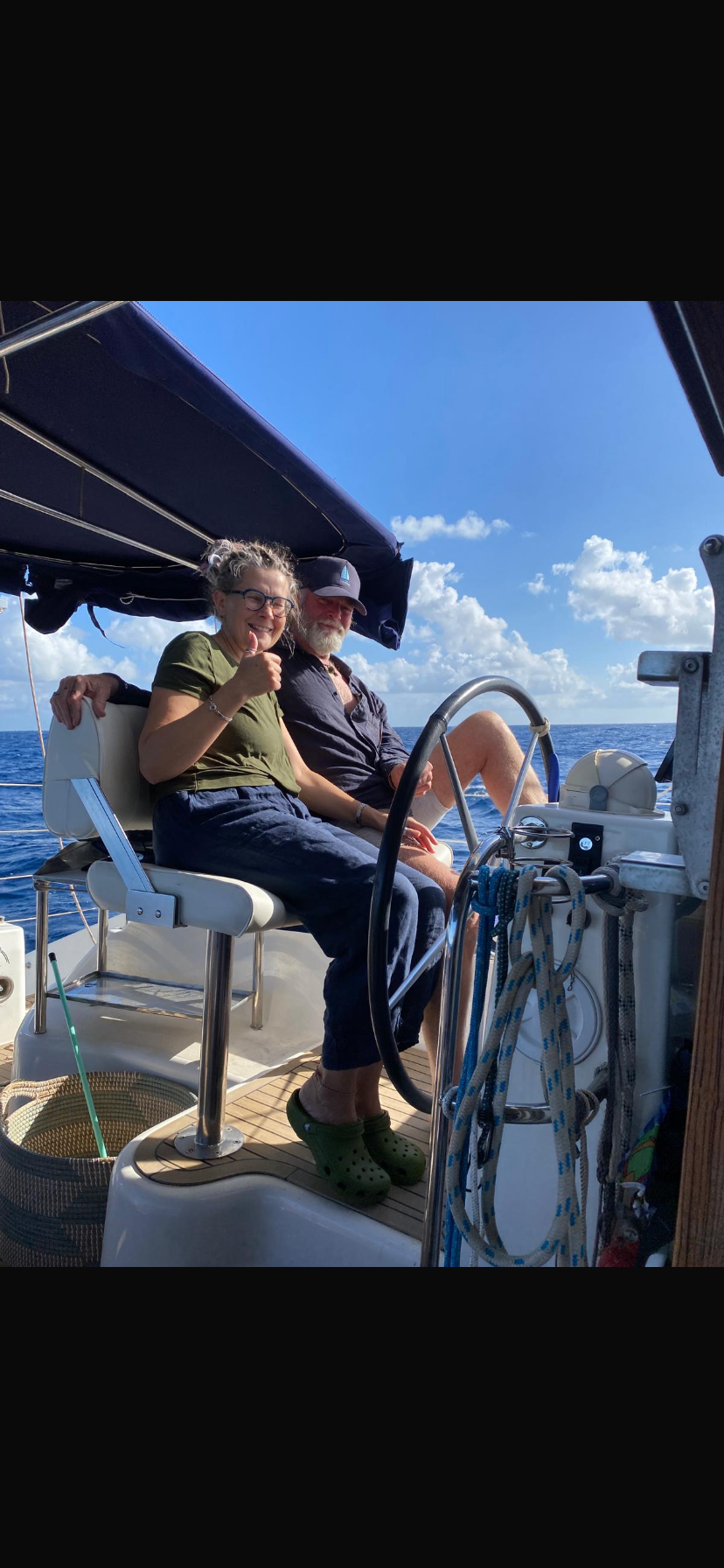
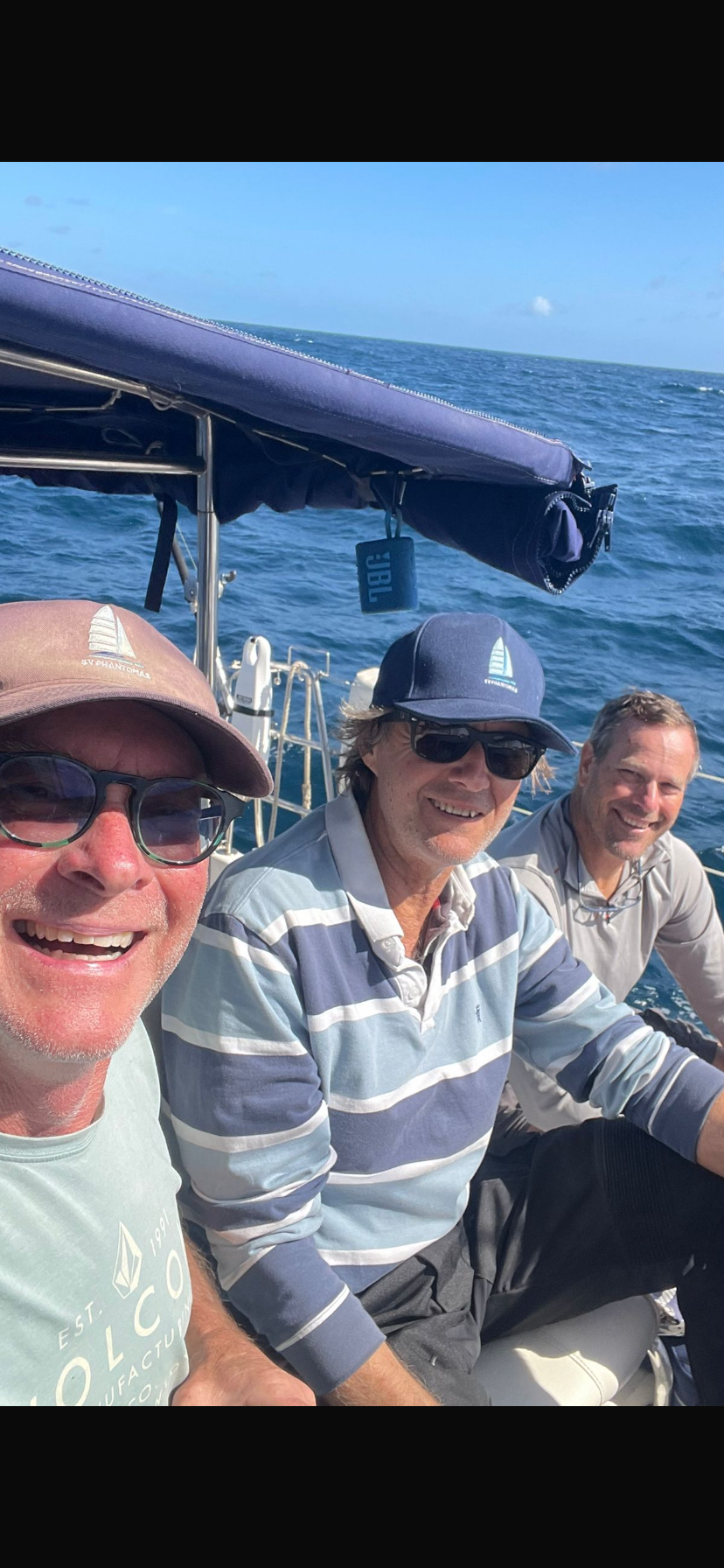
The crew consisted of Cambell Parker and Tim Hawkey both from Esperance (don’t hold that against them) who both have sailing experience in the windy and cold waters down there, I haven’t known them that long, obviously acquaintances of Michele and her kin. Cam and his Wife, Annette, did spend time on Phantomas in the Greek islands. Also, on the crew where Mark Wicksteed(a very long-term friend of mine) and his partner Agnieszka Mcleod, Mark having had his own catamaran for three years in the Mediterranean. So, we all have sailing experience but not ocean crossing.
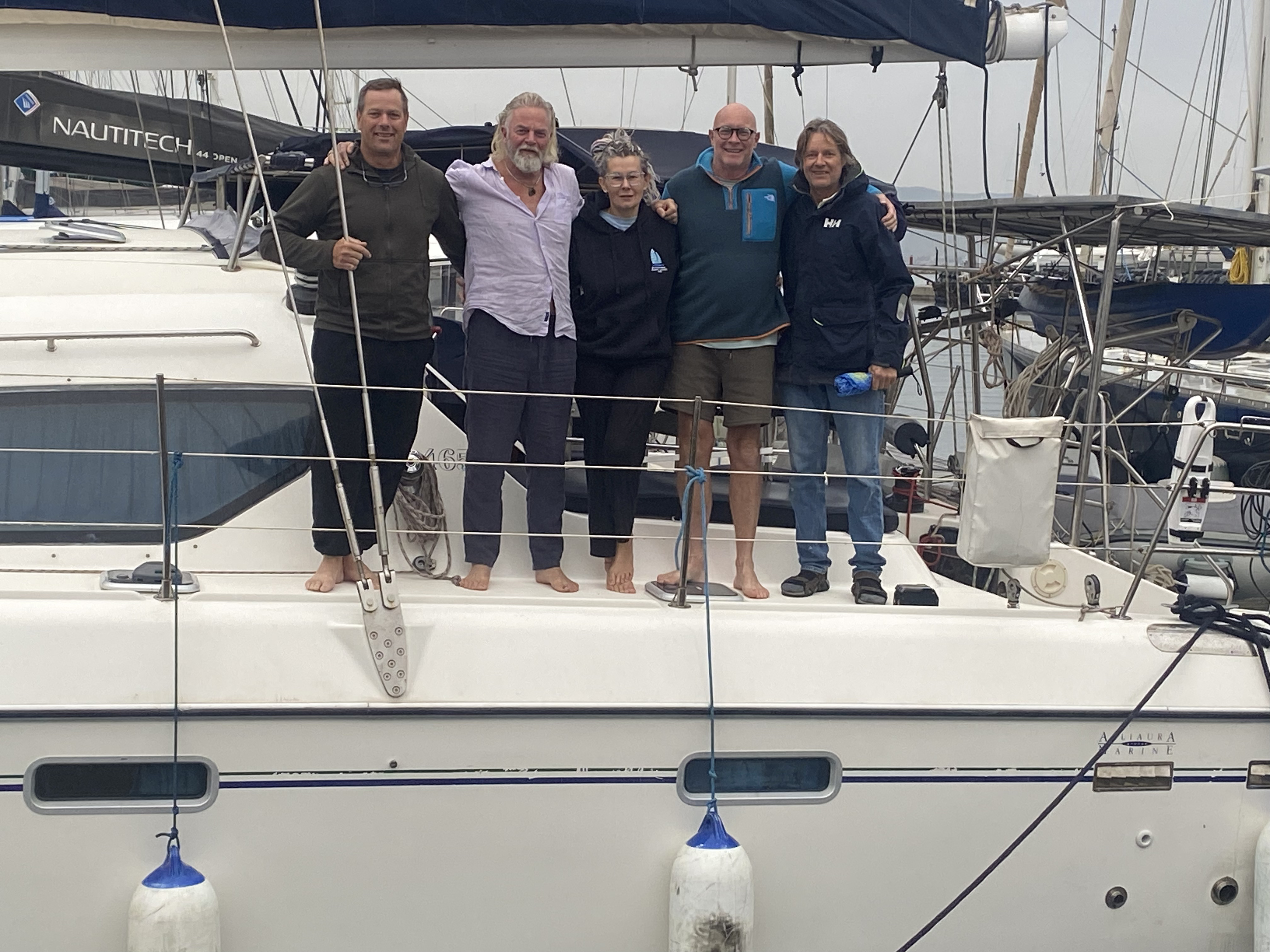
The crew all flew in to meet Phantomas at Gibraltar, or should I say La Linea marina on the Spanish side to spend a couple of days doing the tourist thing (crossing the border/airstrip on foot is interesting, if someone yells” Duck”, you’re in trouble) as well as provisioning for the five expected days to the Canary Islands. Michele left us there to fly home as open ocean, and bawdy blokes weren’t that appealing to her. Agneiszka was brave.
After provisioning (no it wasn’t all beer and chips) and checking the weather, we threw the lines and prepared to throw up.
My biggest concern at the start was the current Orca threat, they have been stalking and damaging sailboats for the last few years (the jury is undecided as to exactly why). We had the suggested Orca prevention/deterrent items on board, a pinger(acoustic device to annoy dolphins and Orcas, which we later found were largely ineffective) some loud firecrackers, a sacrificial crewmember (draw straws on that one) and a large harpoon. Just kidding, we had already picked Cam as the sacrificial member.
Anyway, we were off, dodging the many ships going through the strait, motor sailing as the winds were a bit fickle to start with, until we were heading south to the Canaries. No Orcas! Cam relaxed a bit.
Then it got real.
Bigger swells, four meters plus, and stronger winds. The winds were gusting towards thirty knots but from aft of the beam so not too uncomfortable but interesting to start with until we got comfortable with our sail set up and what the boat can handle. We were off to the Canary Islands, no going back to port now.
The first couple of days sailing were a bit of adjusting, getting used to the constant boat motion, sleep and rest patterns, being on watch and generally falling into a routine.
We all had our safety rules to adhere to, especially at night. When on watch have a lifejacket on and no going on deck to trim or do sail changes unless someone else is there even if it means waking someone up. We had what is called jacklines running down both sides of the deck to hook onto with harness lines from the lifejackets, these are to prevent you falling overboard as the moving deck upsets your balance, more so at night as you can’t see the waves coming at you. The jackets had a personal locator attached that are supposed to set off a warning on the VHF radio, which is always on, as well as AIS that sends a locating signal to the chart plotter so you can be located without having to be seen. Seeing a small body in the heaving seas is close to impossible especially as the boat is constantly underway and it can take time to turn around whilst dealing with sails and a panicking crew. MOB or man overboard is probably the most single worst thing that can happen, survival rates without a locating device is about 50 percent so we definitely don’t want to test that statistic, prevention is so much better.
Anyway, the first two days I don’t think anyone was feeling great, seasickness wise, with a couple of us not keeping dinner down, but by about the third day we all had gotten used to the movement and feeling better.
We may not have had any interaction with Orcas on our sail from Gibraltar, but we did have what I would assume was a juvenile whale, as it was about eight meters long, following us for a good ten minutes. He came up very close behind and to the side about ten meters away, staying under the water to check us out then backing off for a bit to surface then coming in close again. We did also cruise past a couple of sperm whales lazing about on the surface, they were only fifty or so meters away.
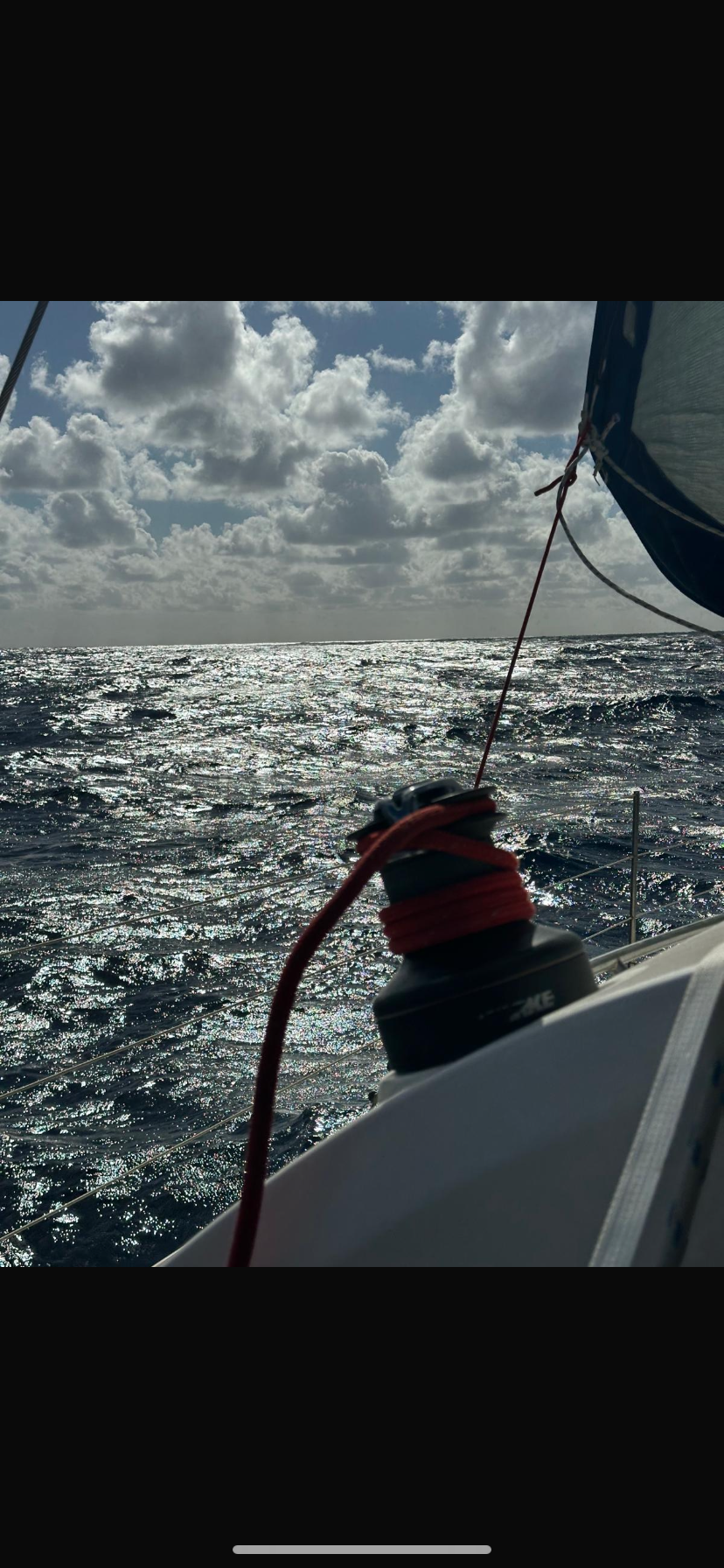
Keeping an eye on wind predictions and using an App to plot a course we had to keep away from the African coast to avoid southerly winds and patches of little wind. We conservatively sailed with one or two reefs in the mainsail (reefing is shortening the sail using lines to hold the sail down from being raised fully) and the headsail furled in a bit, this is easy to do as we have an electric winch to roll it in. Even so we managed a good turn of speed with constant speed over eight knots, seeing up to twelve plus on the surf down the swells. This is something I have not yet experienced on this boat as most of the time in the Mediterranean we tended to avoid going out in anything over twenty knot wind speed but once out at sea there is no turning back and we were getting constant wind over twenty sometimes towards thirty knots.
The wind being from behind definitely made it so much better than heading into it. Even so we were still getting waves slamming under the hull, shaking the whole boat and those in the forward cabins copped the slamming and motion more so than the rear cabin dwellers. Sleeping was not deep sleep unless you were dreaming of being in the trenches of WW1.
We had our watches or shifts as some call it, of three hours each, so with the four of us sailors we had a good nine hours off to sleep, go for a pushbike ride, visit friends or go to the pub. We rotated the watches around so weren’t stuck with a time not to our liking.
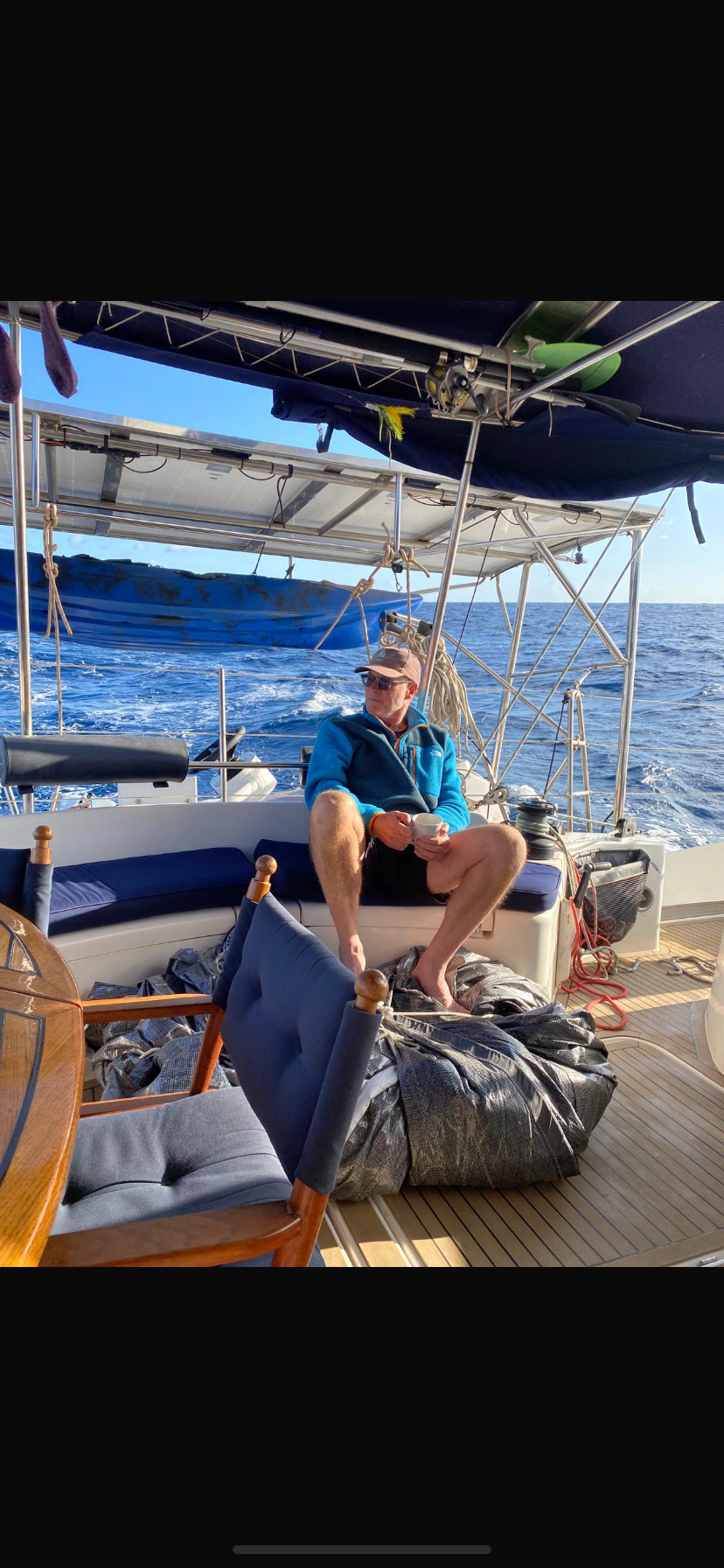
The weather was still a little cool, so the board shorts weren’t put to use often. I was still wearing thermals at night. Then after five days we got to the Canaries.
We sailed down the east side of Lanzarote and Fuerteventura islands to get a bit of relief from the waves and anchored at a town called Moro Jable at eight o’clock at night which is near the bottom of Fuerteventura.
Now I don’t normally like to go into an anchorage at night as there may be hard to see obstacles to give you grief but, on the chart, it showed on open area with good sand holding so in we went. Anchored up, had a beer and went to bed.
Waking up the next morning we noticed we had conveniently missed a couple of mooring floats on the way in. Never go into an anchorage at night!
Spent the day resting on anchor and the crew went into town for a look see. I ferried them in with the dinghy and stayed with the boat.
We were off again the next morning at six am whilst still dark, keeping a torch light on the mooring balls, to head to Grand Canaria and Las Palmas marina. A good sail there with wind on the beam saw us get there at three in the arvo. We topped up with fuel and only used forty litres since Gibraltar doing 790 nautical miles to the canaries.
Las Palmos is quite a big place, over 380 thousand people. The marina was still quite full, but we got a spot, reversed in and tied up with no problems, tidied up and walked to the end of the dock to the sailor’s bar across the road not a hundred meters from the boat.
Wellll… Had a great night. Talking to other yachties and a few boat hitchhiker’s hoping to crew their way across the Atlantic and maybe the world, had a few beers as well. As we found out the Canaries as well as Gibraltar is a congregation spot for these, usually young, travellers willing to help crew for a berth across the Atlantic and beyond. A few more beers. A real cosmopolitan bar, the guitars and bongo drums came out so we had another beer.
The next couple of days were spend doing more provisioning as now it will be three weeks at sea. There was minor boat work with a reefing line end for ended as it was showing signs of chafe through the eyelet at the back of the sail, other than that it was all OK.
Canaries to Grenada.
On the morning of 21st of December, not too early as what’s the point, we set off. Next stop Grenada.
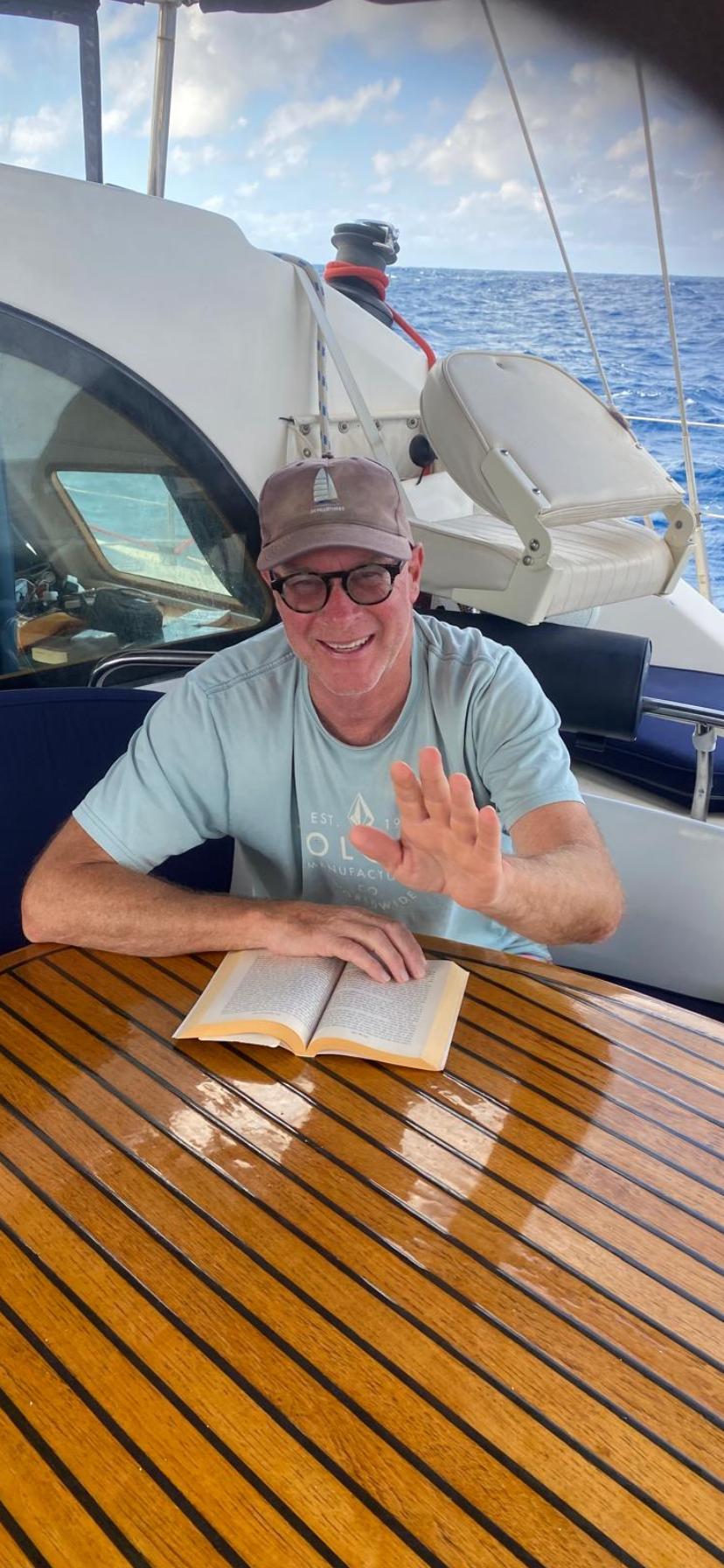
Had to motor and motor sail for the first day or so as the islands were shadowing the north easterly winds a fair bit, The island of Tenerife has Spain’s highest mountain at 3700 meters and had snow on the top. Back into the daily routine, watches, sleeping eating, reading (a new skill for Cambell) and when Star Link is on, contacting home and catching up with the news and whatever takes Trumps fancy.
The three weeks turned into a blur with the daily monotony, gazing at the limitless waves, watching the ever-present flying fish escaping our path, making jokes at each other’s expense and stargazing at night with plenty of time wondering what we were doing out there. We did have the odd few dolphin pods surfing our bow wave for a while which is always good to see.
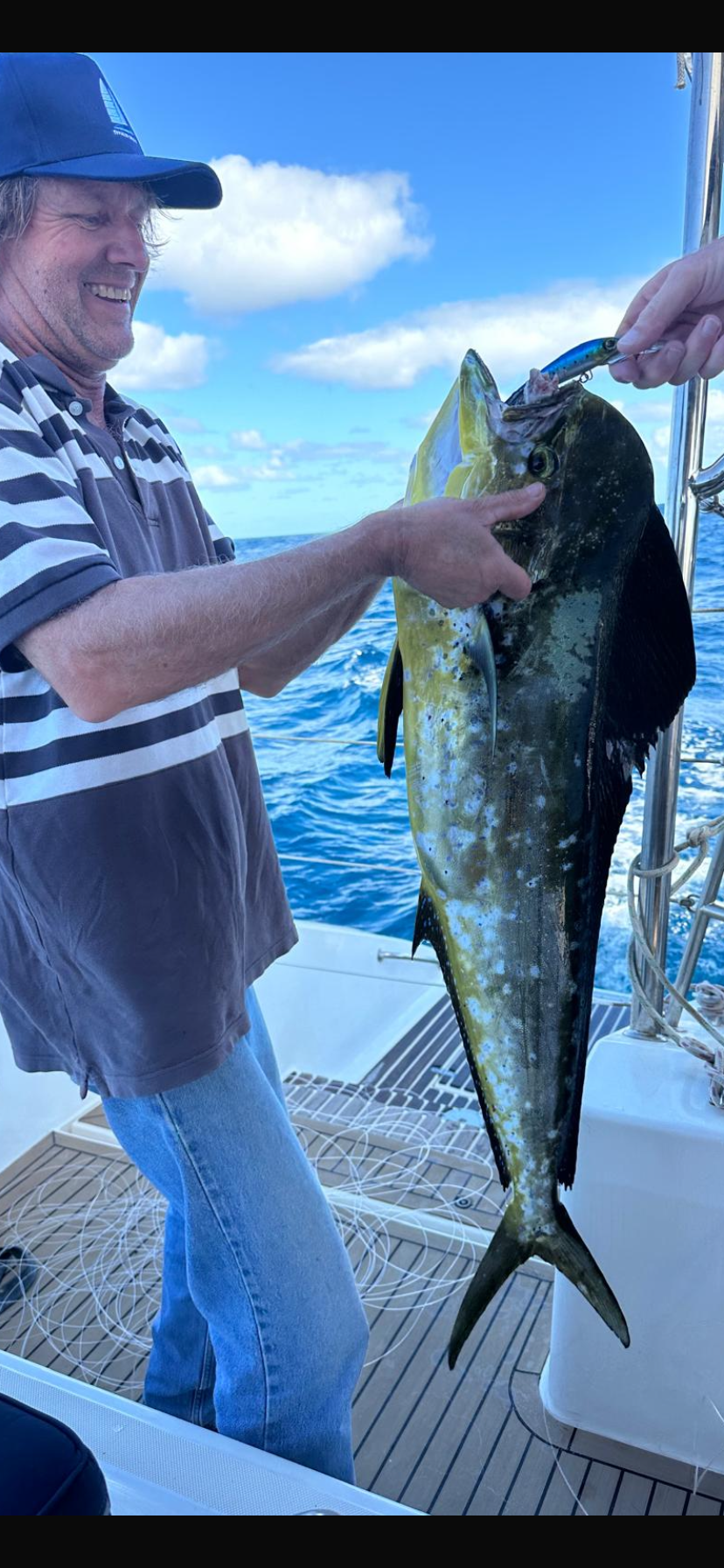
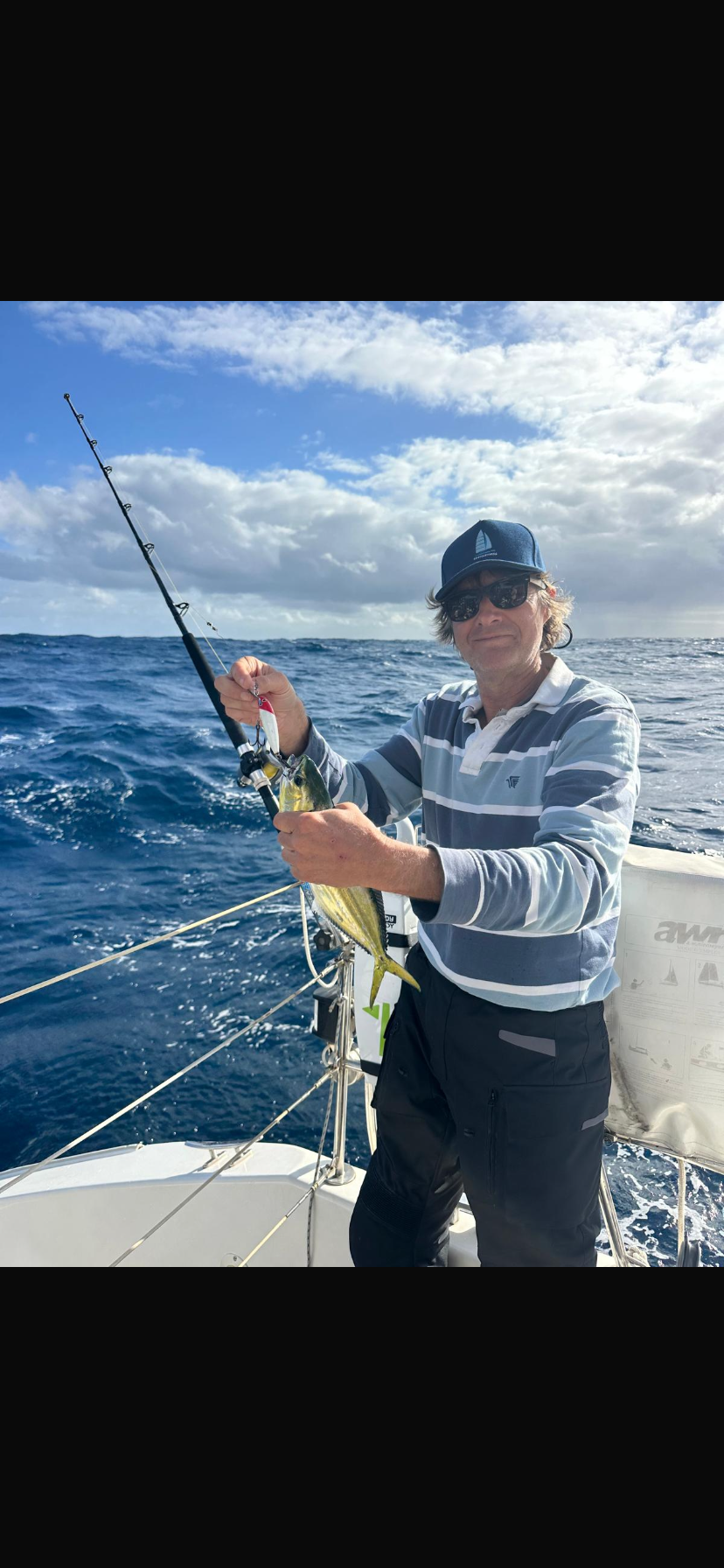
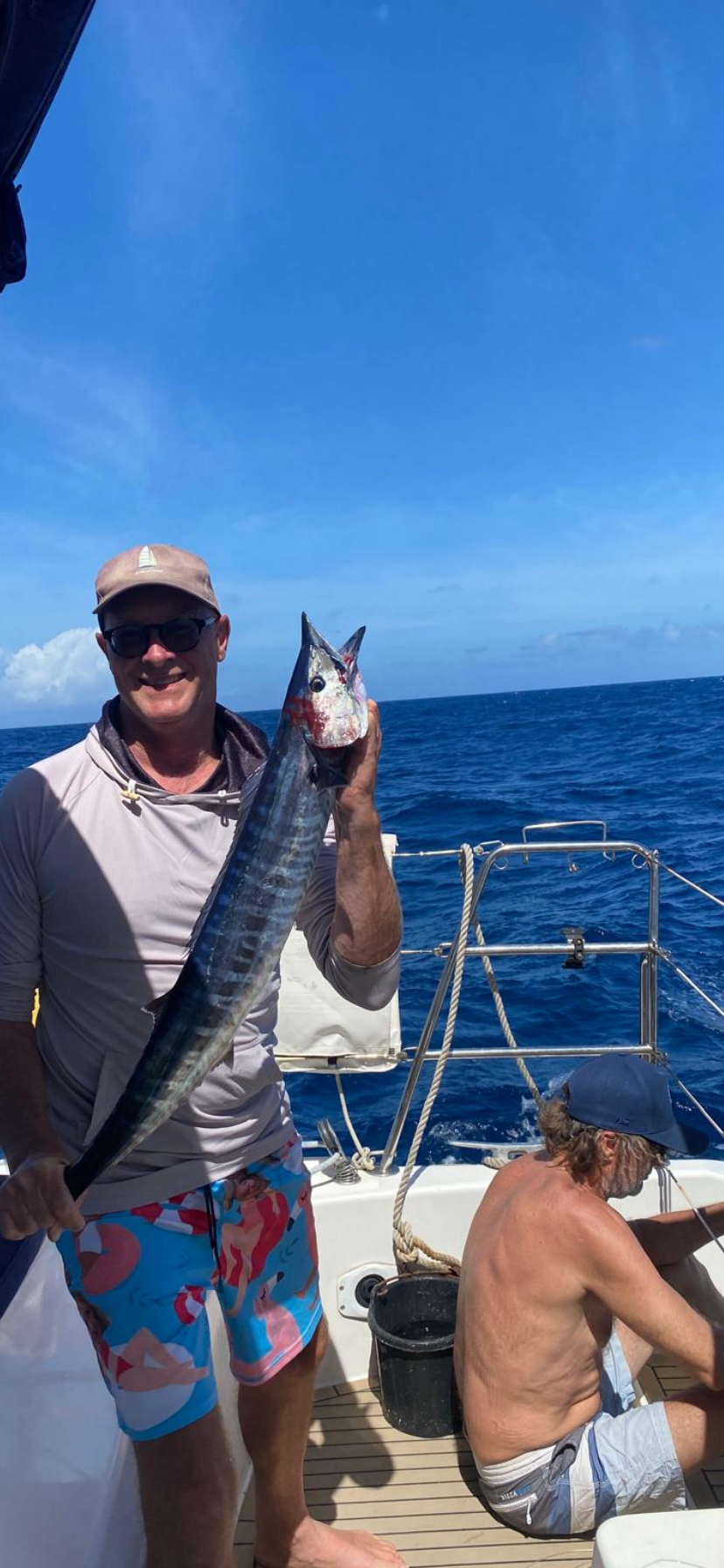
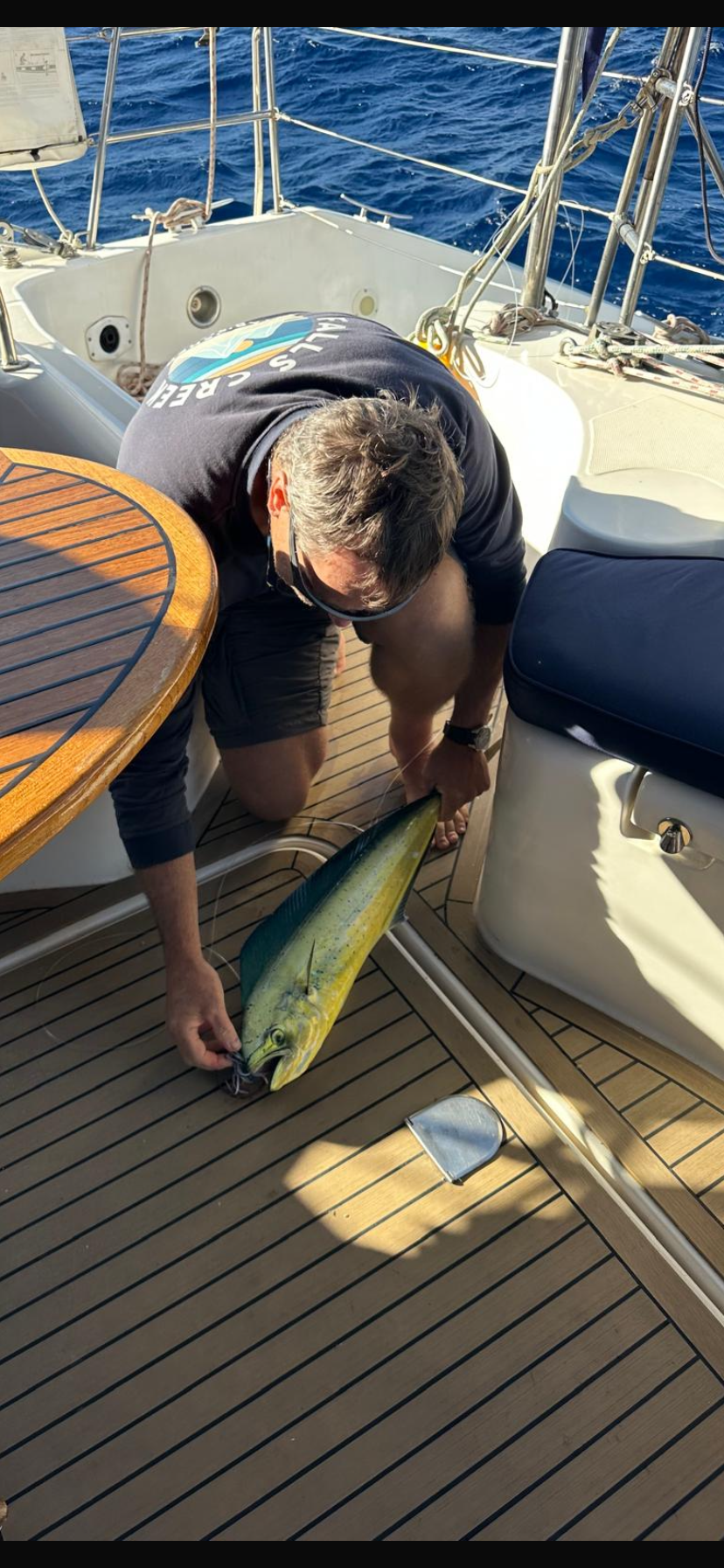
The other activity that kept us amused was fishing. We had a handline out most days as well as the reasonably expensive rod and reel out trolling for whatever may have a go. We successfully landed nine Mahi or Dorado and three Wahoo. Tim let one go, a Dorado, from the rod, he landed it on the scoop of the boat, and it promptly spat the lure and flipped a few times before disappearing back into the water to the cries from the crowd. Tim reckons it was the biggest one, bigger than the one I landed but I don’t think so. A bird in the hand is worth two in the bush. The hand line was the winner, the fish showing scant regard for the expensive rod and reel, I think the rod only landed about three fish.
Other chores to do included doing a bit of washing, using the washing machine, now and then, which necessitated running the generator (which performed flawlessly after the dramas with it the last sailing season) also keeping an eye on the water levels and running the water maker whilst the generator was on. Because of the suns angle, shading from the sails and 24/7 running the navigation instruments and autopilot the solar struggled keeping the batteries charged, so virtually every day we had to run the generator at least three hours a day to top them up. If the generator went down then we would have had to run an engine to charge them up, not so good. The water maker is almost a necessity on long crossings, with five on board it’s amazing how much water is used with everything adding up, not just drinking but cooking, washing dishes, showering, brushing teeth, washing hands as well as two of the toilets are freshwater flushing. So, we were going through over a hundred litres a day with the tank holding six hundred litres, but we wanted to keep a minimum of three hundred in reserve in case the water maker gave trouble so every second to third day we were running the water maker. We did have emergency bottled water stashed just in case.
Leaving the Canaries (which apparently has more to do with canine, dogs, than birds but got bastardised over time to become the Canaries) we steered a course south west down past the Cape Verde islands to pick up the easterly trades to then head west direct to Grenada, as I mentioned it was largely downwind sailing mostly using the headsail and a gennaker in a wing on wing configuration, that is one sail out one side and the other out on the opposite side. The mainsail was used when the winds were at an acceptable angle or we needed to change direction to catch more favourable winds. The mainsail or ‘painsail’ is more of a handful requiring at least two to raise and lower, having to turn the boat around to “head up” into the wind to take the pressure off the sail to raise or lower it or to put in or take out a reef. This means heading into the wind and waves, bouncing around to get the job done. Needless to say, everyone had harnesses on.
The other annoying thing is the mainsail is noisy, creaking reef lines on the boom, main traveller clunking when the sail does flap due to the wave action and the flapping noise itself, so much quieter without it. But…. The bloody gennaker halyard (the line that hauls it up) had a very annoying squeak, screech at the top of the mast, from where the line goes over rollers, due to the boat movement causing the line to be constantly moving in and out of the mast. We weren’t too sure of the exact cause so lowered the gennaker to make sure the line was not chafing but it was ok so back up it went with the noise. In the cockpit the noise was negligible but the mast and the side stays holding the mast up, transferred and amplified the noise equally to all four cabins. Getting to sleep made even easier!
CHRISTMAS ON THE BOAT
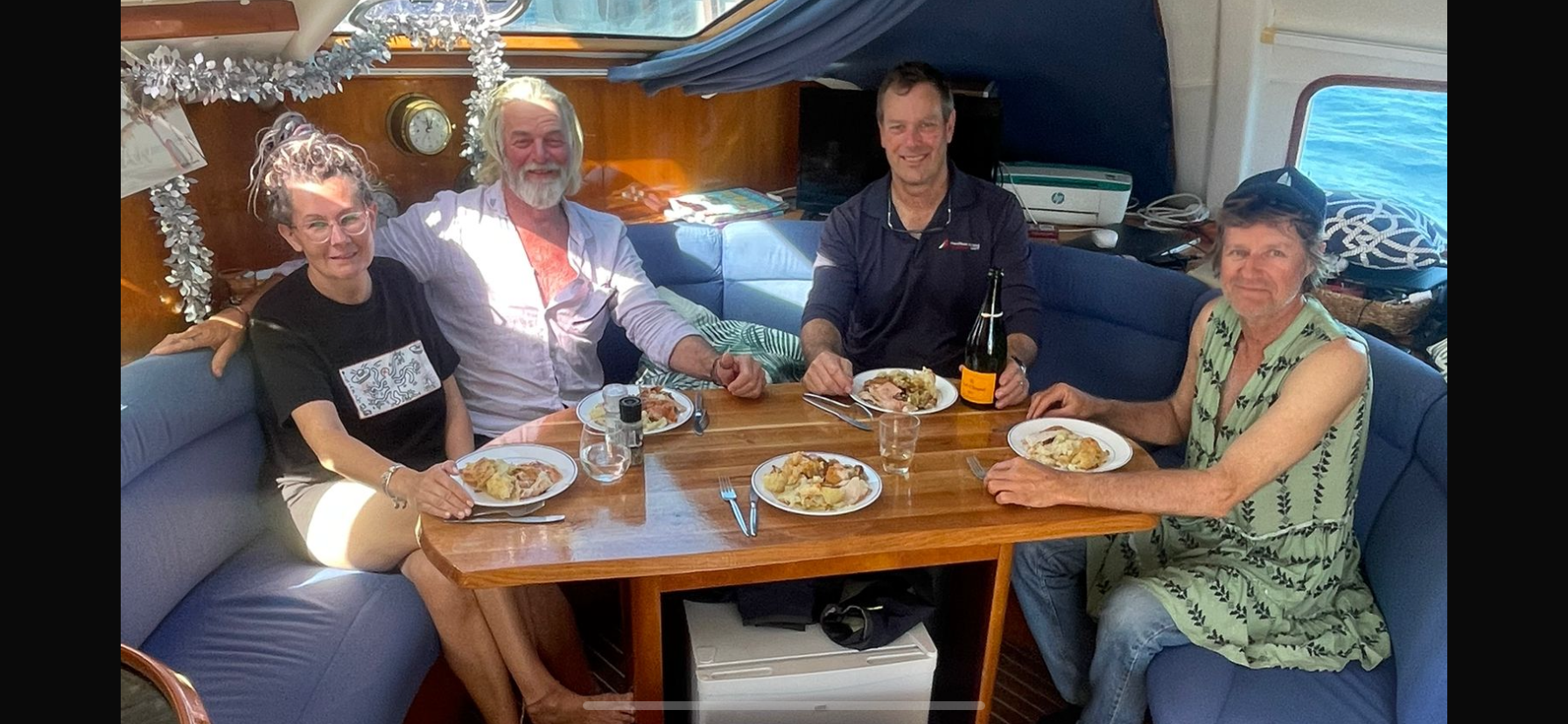
That’s right, we had both Christmas and New Years on the boat. Not too much to report on our Christmas festivities on the boat. Cam made the effort and got up with a loud festive shirt on, so not to be outdone I went through Michele’s wardrobe and found a fitting little number to suit! Tim did wonders with a Turkey, then brought it out from his cabin and cooked it with all the trimmings. Party crackers were a little disappointing with some jokes but no hats! We also had the Secret Santa thing that was pre organised by Michele before we set sail so that was entertaining. New Years Eve, we shook hands and the opened a bottle of Champagne. Only one!
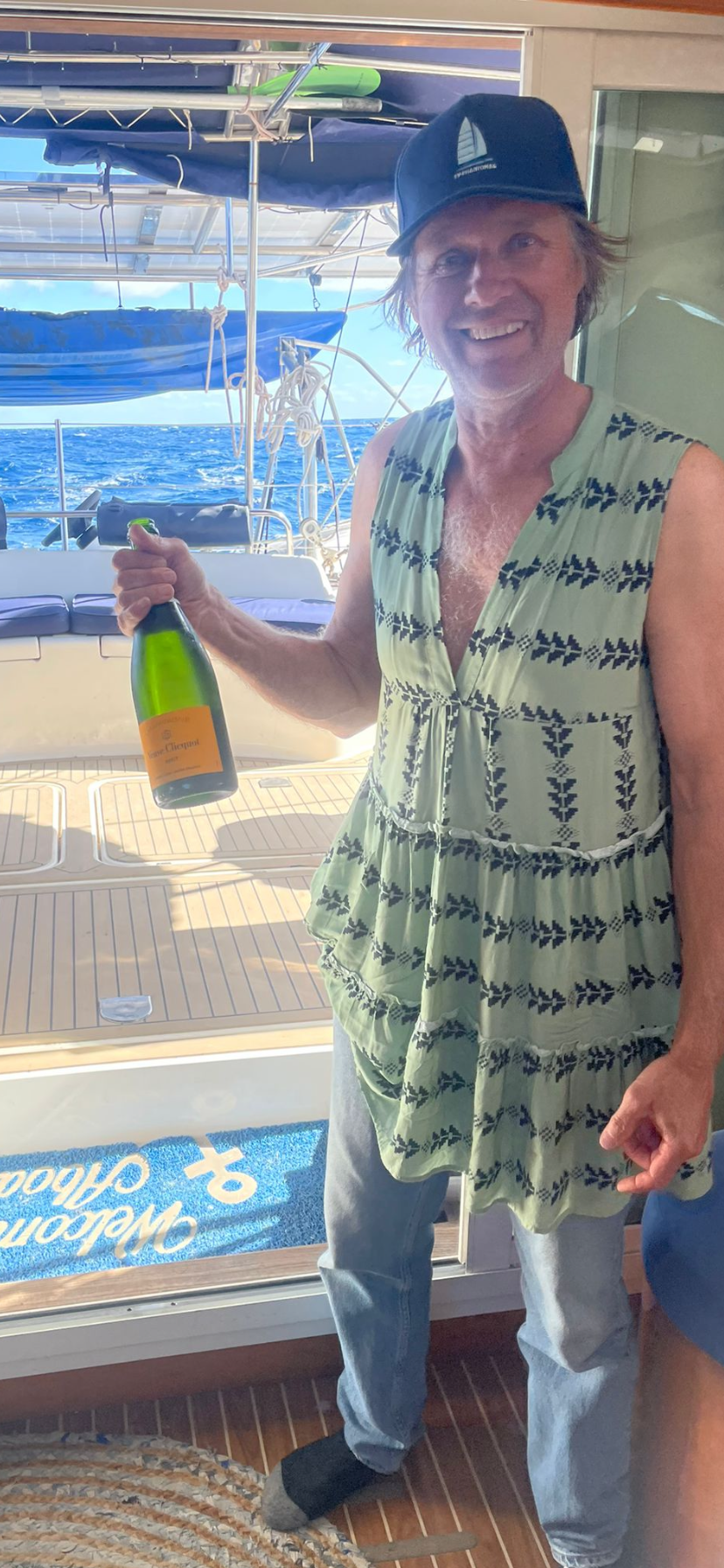
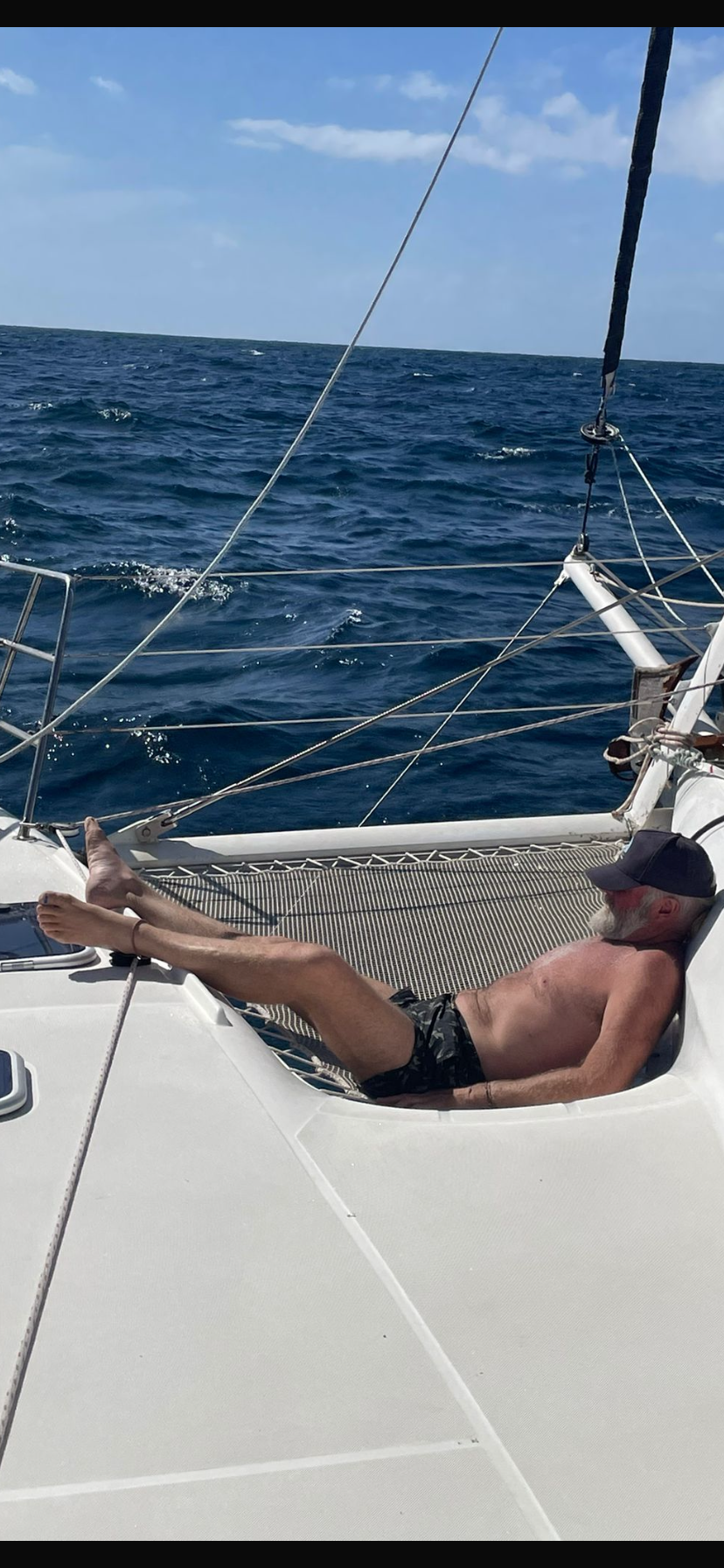
Anyway, the weather gradually got warmer till finally I could break out the shorts in the last week as we neared Grenada. Surprisingly we encountered very little other boat traffic until the last three days, so we were very lonely out there. Nearing Grenada commercial traffic started appearing so we finally had to keep more alert on watch.
The last day as we neared land, sighting it, the first land for three weeks, we got excited to get sorted with immigration. As it was the weekend, the office closed at two in the arvo so both motors were on to make sure we got there before they closed as we wanted to get in the marina and weren’t sure of the protocol of entering the marina before immigration check in. I
as skipper, I had the job of doing the check in procedure with Customs & Immigration, so we anchored in Prickly Bay which was full of boats, lowered the dinghy and I was off at about 1.30 pm. Found the office OK but I felt like the office was on the water, the land under me was rocking like crazy, I had no land legs. After a bit of drama with needing cash an having to finding an ATM, I got the boat and crew cleared into Grenada without a problem. Then it was and back to the boat. The others on the boat were fine…. Having a swim and a couple of beers while they waited for me to return. So, I caught up with them then off to the marina.
That’s another story.
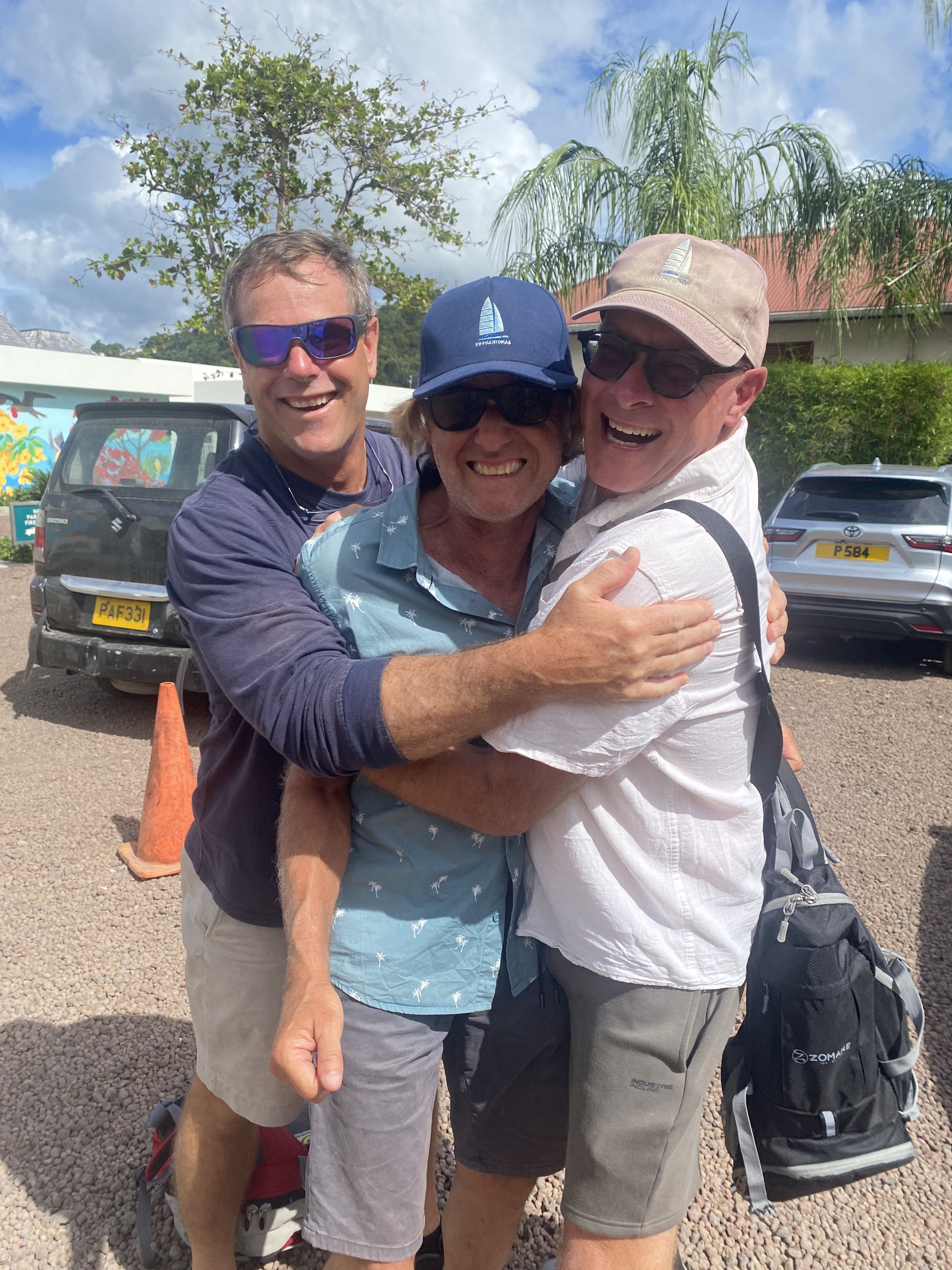
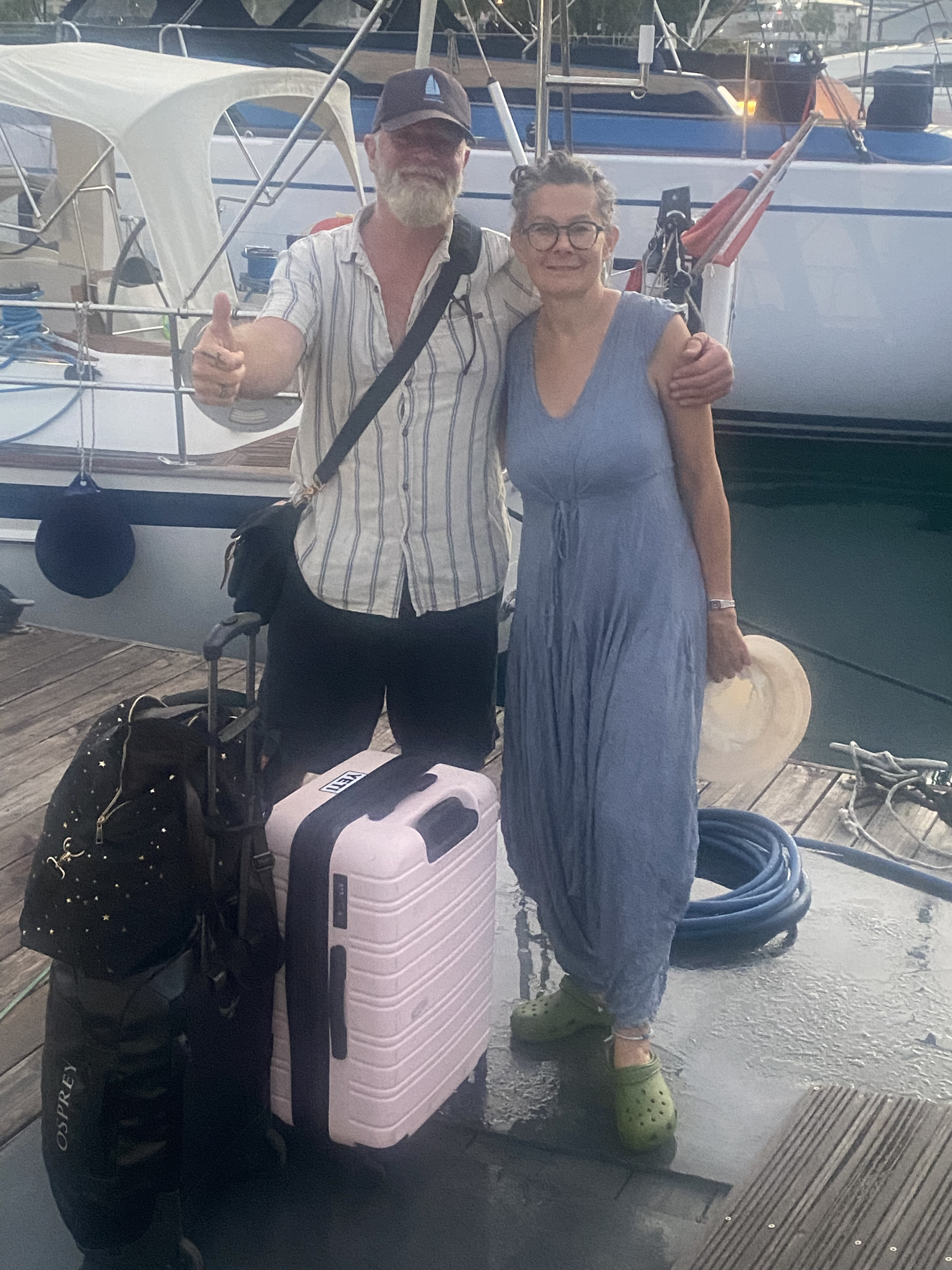
For any questions in reference to why Tony was wearing a dress, please address those to him personally because I have no idea. What happens on The Crossing, stays on The Crossing.